In Search of a Base
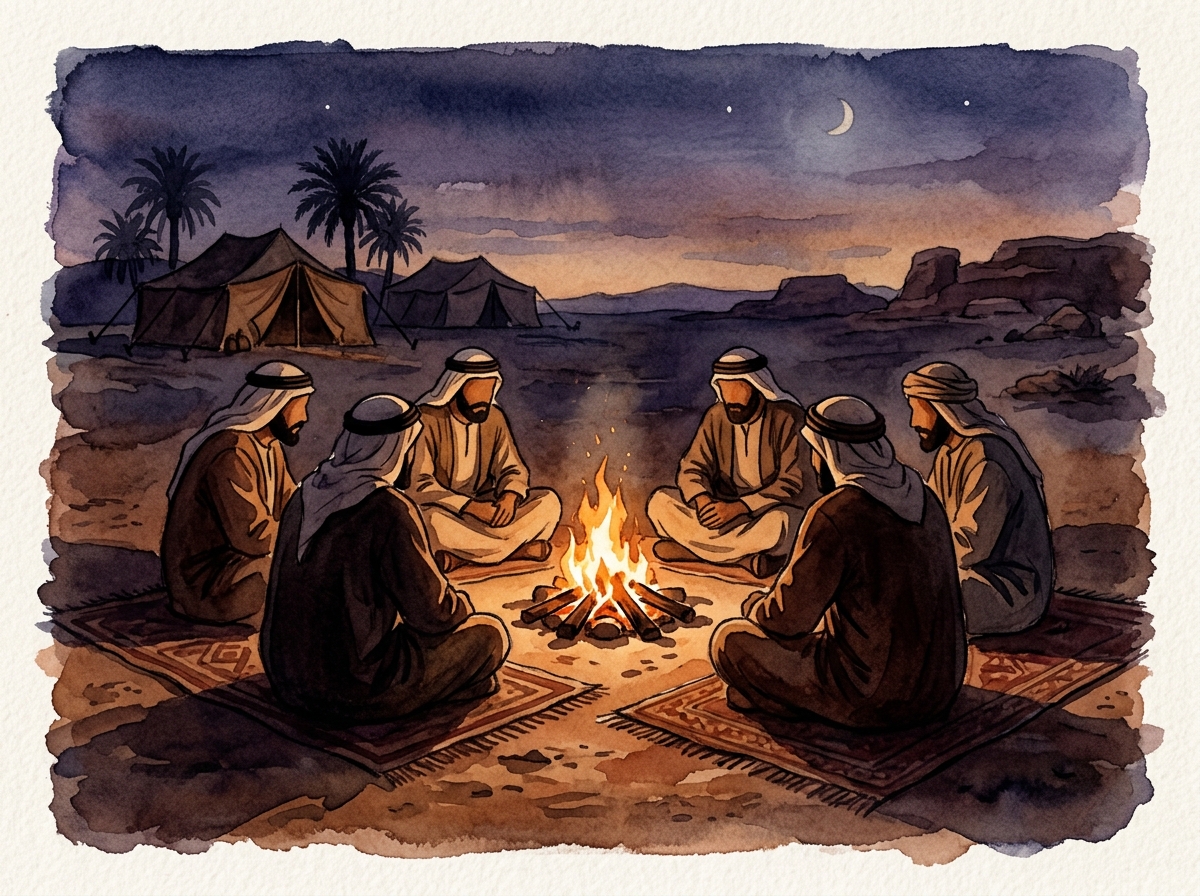
Rasūlullāh ﷺ Visits Camps of the Arabs, after the passing away of Abū Tālib and Khadījah, and seeing the stalemate that the mission reached in Makkah – even though there were still some converts trickling in, but overall it was reaching to a stagnating state and many avenues were being blocked – so the Messenger of Allāh felt the necessity of finding an alternative base, somewhere where he can have freedom to propagate the Message, and he was actively pursuing that goal by meeting with the Arab tribes, the Arab delegates, during the season of Pilgrimage, because that was a time when people came from all over Arabia to one location; Makkah. So Rasūlullāh ﷺ would devote the days of Hajj to visiting the camps of the Arabs; he would visit every tribe in their campground and give them Da’wah and ask them for protection. Az-Zuhrī states,
“The Messenger of Allāh, would for the period of those years, present himself to the Arab tribes at each fair, speaking with each tribal leader but asking them only for their protection and support. He would say, ‘I do not wish to force any of you to do anything, any of you who agree to what I ask may do so, but I would not compel anyone not so wishing. All I want is to guard myself against those who want to kill me, so that I may fulfil my Lord’s mission and carry out whatever decree he wishes regarding myself and those who support me.’ But not one of them accepted him, every one of these tribes reached to the following conclusion: ‘The man’s own tribe knew him best, how could we accept as suitable for us someone who has subverted his tribe and whom they have expelled?’”
Since his tribe did not accept him, they know best; that was their conclusion. By the way, Az-Zuhrī is one of the early Muslim scholars, he was among the generation of At-Tābi‘īn or a little later than that, and he was the one who was given the responsibility of compiling Hadīth, which happened during the time of ‘Umar Ibn ‘Abdul ‘Azīz. This was the first official project to compile the Hadīth of Rasūlullāh ﷺ, and the one entrusted with this mission was Az-Zuhrī, and the one who appointed him to that position was the Khalīfah himself, ‘Umar Ibn ‘Abdul ‘Azīz. So again, these were the words of Az-Zuhrī.
Banū Kindah, Banū ‘Abdillāh, Banū Hanīfah all Reject Rasūlullāh ﷺ
Ibn Is'hāq stated that Ibn Shihāb Az-Zuhrī said – again, relating to Az-Zuhrī – that Muhammad ﷺ visited some of the tribes, and he narrates the story of him visiting the tribe of Kindah. He says that Rasūlullāh ﷺ went to them, gave them Da’wah; they refused him. Rasūlullāh ﷺ next went to a clan called Banū ‘Abdillāh – the sons of ‘Abdullāh. So Rasūlullāh ﷺ went to them explaining Islām, and then he told them, “And look at how Allāh has chosen for you a good name, you are the sons of ‘Abdullāh.” But they also turned him down. Next Rasūlullāh ﷺ went to the tribe of Banū Hanīfah, and they treated Rasūlullāh ﷺ so bad that Az-Zuhrī says,
“None of the Arabs gave him so rude a rejection as they did.” And Subhān'Allāh, the same people, Banū Hanīfah, are the ones who years later are going to lead the worst revolt ever against Muhammad ﷺ, which happened right before he died and was only ended in the time of Abū Bakr As-Siddīq, and this revolt was led by Musailamah Al-Kadhdhāb.
Musailamah Al-Kadhdhāb was from the tribe of Banū Hanīfah, Musailamah Al-Kadhdhāb is the man who claimed prophethood, and this was the greatest revolt and one of the worst battles that occurred against the Muslim armies. Banū ‘Āmir Bin Sa’sa‘ah Next, Rasūlullāh ﷺ went to the campgrounds of the tribe of Banū ‘Āmir Bin Sa’sa‘ah. Banū ‘Āmir Bin Sa’sa‘ah, when their leader Baiharah Bin Farās met Rasūlullāh ﷺ and saw him and listened to his words, he became so impressed by what he saw, so Baiharah said, “I swear, if I were to have this brave man of Quraish, I could eat up the Arabs with him.” Now, Baiharah is thinking politics, he wants to recruit Muhammad ﷺ;why? To conquer the lands of the Arabs, because he saw that Muhammad possessed qualities that were unique. So he told Muhammad ﷺ,” If we were to follow your orders and then Allāh gave you victory against those opposing you, would we have power after you were gone?” So the response of Muhammad ﷺ was, “Al-Ardu Lillāh, Yūrithuhā May-Yashā', Wal ‘Āqibatu Lil Muttaqīn – The earth belongs to Allāh, and He will give power to whomever He wishes.” In other words, this is not something that I can give you, it is something in the Hands of Allāh, and it is not a matter of authority and power, this is not a power-struggle. Rasūlullāh ﷺ is telling him that this is a matter of religion, the earth belongs to Allāh. The man then responded and said, “Are we to present our throats to the Arabs in your defence, and then if God gave you victory, see power go elsewhere than to us?” He understood that standing up with Muhammad ﷺ is a risk, and we are going to have to fight for it, but he was telling Muhammad that we are not going to sacrifice our lives and then see the power being transferred to someone else, and he said, “We will not have anything to do with you,” and he turned down the offer of Muhammad ﷺ, he rejected the Message.
Banū ‘Āmir Bin Sa’sa‘ah went back to their homeland and there was an old man among them who was a wise elder of theirs. Because of his age he was not able to attend the Pilgrimage, but whenever they would come back he would ask them about the events that happened. So when they went back they told him, “We met a young man, the grandson of ‘Abdul Muttalib from Quraish, and he was claiming to be a Prophet and he came to us and we rejected him.” This old man said, after putting his hand over his forehead, “Could your mistake be put right? Can its consequences be reversed? I swear, no descendent of Ismā‘īl ever made such a claim falsely, it has be true! Where did your good judgment go?” This wise old man told them that none of the descendants of Ismā‘īl has ever claimed to be a prophet, this is not something common among the Arabs, the Arabs do not know the concept of prophethood to claim it, the Arabs were an illiterate nation, they did not have a history of prophethood. The last Prophet they knew was Ismā‘īl which was more than 2,000 years before that, so for them to claim prophethood is something that never happened. So this old man was saying, ‘It must be true, where was your good judgement?!’ And then he said, ‘Is this a mistake that can be rectified?’ Is this something that we can fix? Abū Bakr’s Expertise in Genealogy There is another narration by Abū Na‘īm and Al-Hākim and Al-Bayhaqī. I am going to have to read through this, it is quite long, but I find it a fascinating conversation, it shows the qualities of Abū Bakr As-Siddīq, ‘Alï is the one who is narrating this story. ‘Alï Ibn Abī Tālib says, “When God ordered His Messenger to present himself to the tribes of the Arabs, he left along with myself and Abū Bakr for Minā'.” Minā' is where the camps are set, just like today in Hajj; that is where people spend the three days of Ayyām Tashrīq, that is where the tents are. So Rasūlullāh ﷺ is visiting these different Arab tribes, and Rasūlullāh ﷺ used to always accompany Abū Bakr with him because Abū Bakr was an expert in genealogy, Abū Bakr knew the history of the tribes, their names, their legends, he knew a lot about them and this was an asset that Rasūlullāh ﷺ was taking advantage of, because Abū Bakr As-Siddīq was a walking encyclopedia when it came to the genealogy of the Arab tribes. So Rasūlullāh ﷺ used to always
accompany Abū Bakr with him. Plus, Abū Bakr was a well-known man, he has travelled widely and he was known by the various Arab tribes. Anyway, ‘Alï Ibn Abī Tālib says, “Abū Bakr, God bless him, went forward and made his greetings. He was in the very vanguard of good and an expert in genealogy.” So he came to this Majlis – meeting, of this particular clan. Abū Bakr As-Siddīq walked up to them. And when ‘Alï Ibn Abī Tālib says, ‘Wa Kāna Sabbāqin Ilā Kulli Khair – He was at the very vanguard of every good,’ ‘Alï Ibn Abī Tālib was telling us that in everything good you would find Abū Bakr ahead of everyone else; Abū Bakr was first. You know, there is the story when ‘Umar Ibn Al-Khattāb said, “Tonight I am going to do something that Abū Bakr did not do,” and he went to Rasūlullāh ﷺ and gave him half of his money, and he said, “O Rasūlullāh ﷺ, did anyone else come to you?” Rasūlullāh ﷺ said “Yes, Abū Bakr came to me and he gave all of his money.” ‘Umar Ibn Al-Khattāb said, “I will never compete with him after this.”
So ‘Alï Ibn Abī Tālib is saying that Abū Bakr is ahead of every good; in everything good, you will find Abū Bakr there first. He was the one who walked up to these men, he greeted them and then he said, “From whom do you people come?”
They said, “We are from Rabī‘ah,” the tribe of Rabī‘ah which was in the North-east part of Arabia; they may have been in the area of ‘Irāq. Rabī‘ah is a large tribe, Abū Bakr now wants to narrow it down a little further. They said, “We are from Rabī‘ah.”
Abū Bakr said, “A'min Hāmmahā Am Min Lawāzinhā?” It is translated here as, “From its mainstream or its branch?” Actually a more accurate translation will be, “Are you from the forehead…” – Hāmmahā means the forehead – “Are you from the forehead or are you from the branches?” The limbs, meaning you are from the lower parts of the tribe.
They said, “We are from the greatest mainstream of it,” meaning we are the best.
Abū Bakr As-Siddīq wanted to verify that claim, to realise whether they are the elites of their people or they are from the laymen, so Abū Bakr started this conversation, he asked, “Is ‘Awf of you, of whom it is said,
‘There is no free man in ‘Awf’s valley?’” This man, ‘Awf, was from the tribe of Rabī‘ah, and he was such a strong man that everyone in the valley was so submissive to him that they ended up saying that there is no one free in his valley. And by the way, in the culture of pre-Islāmic Arabia, strength and power and sometimes even violence was viewed with respect; this is one of the things that Islām came to change, that oppression is not good. So Abū Bakr asked, “Is ‘Awf of you, of whom it is said, ‘There is no free man in ‘Awf’s valley?’”
They said, “No”.
“Does Bastān Bin Qais, Abul Liwā' and Muntahal Ahyā' belong to you?” They said, “No.”
“Is Al-Hawfazān Bin Shuraiq, the killer of kings and the robber of their souls, a kinsman of yours?”
“No.”
“Is Jassās Bin Murrah, the protector of honour and the defender of the neighbour, from you?”
They said, “No.”
“Is Al-Muzdalaf, he of the unique turban, from you?”
They said, “No.”
“Are you related to the kings of Kindah?”
“No.”
“Are you related to the kings of Lakhm?”
“No.”
Abū Bakr said, “So you are not from the mainstream, but you are from the branch.” You can see the detailed information that Abū Bakr As-Siddīq had about these people.
Now, a young man from Rabī‘ah stood up, his name is Daghfal, his beard just beginning to sprout, meaning he was young in age. He jumped up and he grabbed the bridle of Abū Bakr’s camel reciting, “Those who ask of us will be asked of. As for the burden of proof, we neither know it nor bear it as responsibility.” He then said, “Hey you! You asked and we replied, hiding nothing from you. We want to ask you something; who are you?” Now it is
our turn. You asked us questions, we answered, give us a chance to ask you. “So who are you?”
He said, “I am a man from Quraish.”
The youth commented, “Well said, you are a people of leadership and nobility, the vanguard and guide of the Arabs.” There is nothing to complain about; you are from Quraish, you are from the nobility.
Now let me narrow it down, “What part of Quraish are you from?”
Abū Bakr said, “I am of Banū Taim Bin Murrah.” Banū Taim Bin Murrah are a small clan in Quraish; was not famous, they were not known for any special strength or uniqueness.
So the young man said, “You have shown the target shooter where the bull’s eye is.” He said, “Is Qusaÿ Bin Kilāb, he who killed at Makkah those trying to conquer it, a kinsman of yours? That man Qusaÿ, who drove the rest of them away and brought his own people from all over and settled them in Makkah, took over the temple and set Quraish in the dwellings, the man who was therefore known as the Unifier, and about whom a poet spoke the verse, ‘Was it not your father who was called the Unifier by whom God brought together the tribes of Firr?’”
Abū Bakr said, “No.”
“Were not ‘Abd Manāf, the ultimate giver of advice, and Abul Ghadārif, the great leader, of your stock?”
Abū Bakr said, “No.”
“And ‘Amr Bin ‘Abd Manāf – Hāshim, who prepared bread and meat into the dish…” – You remember when we talked about Hāshim? So he was now famous as being the one who started Ath-Tharīd – “…who prepared bread and meat into the dish, Ath-Tharīd, for his people and all of Makkah, was he not of you? The one of whom the poet said, ‘‘Amr Al-‘Ulā prepared the Tharīd for his people, while the men of Makkah were destitute and under famine. To him they attribute both the journeys, that of the winter and that of the summer. Quraish were as an egg, which when split open came to have its best part, its yolk, as the ‘Abd Manāf. They are the wealthy, as is no other known, and they are those who say, 'Come on in' to the guests. They are those who strike down pure white sheep, those who protect the innocent with
their swords. How fine for you if you stay at their abode, they will protect you from all ills and accusations.’ So is he of you?”
Abū Bakr said, “No.”
Then the youth continued, “You must be related to ‘Abdul Muttalib, that venerable man of much praise, controller of the Makkah caravan, and the feeder of the birds of the skies and the wild beasts, of the lions in the desert, he whose face shines forth like a moon on a dark night?”
“No,” said Abū Bakr. Now remember, they called ‘Abdul Muttalib the feeder of the lions and the beasts and the birds because of the hundred camels that he slaughtered and refused to take anything of it.
“Then you must be of those who have the privilege of Ifādah?”
“No.”
“Perhaps of those who have the privilege of Hijābah?”
“No.”
“Then those with the privilege of Nadwah?”
“No.”
“Then you must be of those who have the privilege of Siqāyah?”
“No.”
“Are you then of those with the privilege of providing Rifādah?”
“No.”
And he is answering no to all of these questions. Now, this was becoming too much for Abū Bakr, so Abū Bakr just turned around and tried to leave, and he pulled the bridle out of the youth’s hand. The young man then responded by reciting a line of poetry, he said, “Sādafa Darrus Saili Darran Yadfa‘uh, Fatāratan Yasda‘uhū Wa Tāra Yahdhibuh – Your flood has met a greater flood that is coming from me, once it will crack it and another time it will go over it.” So you thought that you have flooded me; I have shown you that I could send over you a greater flood. And then he commented, “Well I swear our brother of Quraish, if you had continued to hold out, I would have proven to you that you belong to the lowest class of Quraish, not to its elite.” Rasūlullāh ﷺ came over smiling after this interesting conversation! And ‘Alï told Abū Bakr, “Well this Bedouin has turned out to be a disaster for you.” Abū Bakr As-Siddīq said, “Yes, and there is never a catastrophe without another that follows, and calamity is compounded by words.”
Banū Shaibān
‘Alï then continued and said, “We went to a meeting where you could see calm and dignity in the people, and Abū Bakr went to them and greeted them and he asked them, ‘Where are you from?’ They said, ‘We are from Banū Shaibān.’” So Abū Bakr came to report to Rasūlullāh ﷺ and said, “These are people who have experience and power.” So Abū Bakr went to the group leaders which were Mafrūq Bin ‘Amr, and Hānī Bin Qubaisah, and Al-Muthannā Bin Hārith, and An-Nu'mān Bin Shuraiq. And the person who was closest to Abū Bakr As-Siddīq was Hānī Bin Qubaisah, and he was described as having two braids that came down to his chest. Abū Bakr asked him, “How many are you in number?” Hānī replied, “We are more than a thousand strong, and a few men cannot beat a thousand as they say.” And then he asked, “And how would protection be with you?” He said, “We go to the limit, and every people have their limit.” Abū Bakr then asked, “And how is it when you make war with your enemies?” Abū Bakr is trying to assess their strength. They said, “When we meet in battle, we are the angriest of men. We take greater pride in our steeds than our sons, care more for our swords than our camels. Victory rests with Allāh; sometimes He grants us victory, sometimes others victory over us. You seem to be a member of Quraish?” So Abū Bakr replied, “Yes.” And then he said, “Have you heard of the Messenger of Allāh?” So Hānī said, “We have heard that he says he is the Messenger of Allāh,” meaning we do not yet know but we have heard that rumour. So then Hānī wanted to hear from Muhammad ﷺ, after Abū Bakr has paved the way and opened a conversation. Now Rasūlullāh ﷺ came in and he started speaking, and he spoke after Hānī asked him to, he Hānī said, “What do you propound, O brother of Quraish?” He said, “I call upon you to bear witness that there is no God but Allāh alone who has no associate, and that I am the Messenger of Allāh. I ask you to shelter and protect me until I can carry out what Allāh has ordered me to do. Quraish came out against Allāh’s commands and have denied His Messenger, they have sided with wrong against right, but Allāh is All Powerful, All Praised.” So Hānī, he did like the words of Rasūlullāh ﷺ, he asked him for some more; Rasūlullāh ﷺ recited to him some Āyāt
from Sūrah Al-An‘ām. Hānī said, “And what else do you propound, O brother of Quraish? I swear these are not words of any earthly mortal; if they were, we would know them to be.” So Rasūlullāh ﷺ recited Āyāt from Sūrah An-Nahl.
Anyway, after Rasūlullāh ﷺ had explained the Message of Islām, Hānī liked what he heard, but then he said, “We have people behind us and we cannot speak for them.” We are just a delegation from their people and we cannot give a commitment now, we have to go back and consult our people. And he said words, he said, “I consider that abandoning our religion and following you in yours because of one meeting we are having with you, which had neither introduction nor follow-up, and without our giving it full consideration, nor examining what the consequences would be of what you suggest, that would be a lapse in judgment, rationalist, and inadequate consideration of consequences.”
So these people were very calm, they did not want to rush into judgement, they said we have to think it over, we cannot just leave our religion after one meeting with you. So you can see that there is a difference between these different tribes; with Al-Ansār they immediately accepted, because the grounds were prepared for them, but with Banū Shaibān they said, “There was no introduction to this and there was no follow-up, we cannot just convert right now. So let us go back to our people and consult them, but I want you to also hear the opinion of Al-Hārithah.” There were three leaders; one was religious, one was political, and the other one was tribal affairs. So Hānī spoke his opinion and now he wants to let Al-Hārithah speak.So AlHārithah said, “I heard and I liked what you said,” so they were all impressed. “I was impressed by your words, but our answer should be that of Hānī Bin Qubaisah. For us to leave our religion and follow you after one sitting with us would be like us taking residence between two pools of stagnant water; one Al-Yamāmah, and the other As-Samāwah.” Rasūlullāh ﷺ
did not understand that, he said, “And what might those pools of stagnant water be?” Al-Muthannā replied, “One of these is where the land extends to the Arab world, and the other is that of Persia and the rivers of Khosrow – Kisrā. We would be reneging on a pact that Khosrow has placed upon us, to the effect that we would not cause an incident and not give sanctuary to a trouble-maker. This policy you suggest for us is such a one thing that kings dislike. As for those areas bordering Arab lands, the blame of those so acting would be forgiven and excuses for them be accepted, but for those areas next to Persia, those so acting would not be forgiven and no such excuses would be accepted. If you want us to help you and protect you from whatever relates to Arab territories alone, we would do so.” In case you did not understand what Muthannā is referring to here; the land of Banū Shaibān was bordering the Persian Empire, so their military leader who knows the contracts between them and the Persian Empire, Al-Muthannā, he said, “We have an agreement between us and the Persians that we will never give sanctuary to a trouble-maker, and this religion of yours is something that kings do not like.” So look at his wisdom that he realised from his meeting with Rasūlullāh ﷺ that this is something that kings would not really like, because kings want to have authority in their hands to abuse others and this is a religion that is to free people. He said, ‘We cannot offer you protection from the Persian side but we can offer you protection from the Arab side. So the land that is bordering the Arabs, we will promise you that we will protect you from them, but the area that is bordering Persia, we cannot promise you anything, we cannot stand in front of the Persian Empire, it is too much for us.’
Rasūlullāh ﷺ responded by saying, “Your reply is in no way bad, for you have spoken eloquently and truthfully,” – you have been honest – “but God’s Religion can only be engaged in by those who encompass it from all sides.” Rasūlullāh ﷺ did not want to have half a deal, did not want to have a compromised deal; Rasūlullāh ﷺ wanted to have complete protection. Rasūlullāh ﷺ said the Religion of Allāh needs to be surrounded from every direction; I want an absolute commitment to protect me, you cannot say that I am going to protect you from one side but not from the other.
What we can learn from this is that in our negotiations and in our deals, we need to keep in mind that the Religion of Allāh needs to be held in high esteem, and we should not bargain and negotiate in it, and we should not compromise its terms, and if the agreement does not fulfil the Islāmic terms, we do not have to involve in it. Rasūlullāh ﷺ felt no need in joining an agreement even though he knew his situation in Makkah, he knew how difficult it was, and he knew how badly he needs to leave, nevertheless he did not want to enter into an agreement that was half-hearted, half way through, and this is where you put your trust in Allāh ﷻ;Rasūlullāh ﷺ left it up to Allāh ﷻ and refused to accept that particular agreement from the people of Banū Shaibān.
Al-Ansār
Ibn Is'hāq goes on with the story of Al-Ansār. Now, who are Al-Ansār? When Al-Aws Wal-Khazraj became Muslim, they were called Al-Ansār, which means ‘The Protectors’. Al-Aws Wal-Khazraj were the two Arab tribes that were living in Madīnah, and they were descendants of the branch of Qahtān. You see, the Arabs divide into ‘Adnān and Qahtān; Qahtān are the Arabs of Yemen and ‘Adnān are the descendants of Ismā‘īl, so AlAws Wal-Khazraj were from Qahtān. They were neighbouring three Jewish tribes; Banū Qurayzah, Banū Qaynuqā’ and Banū Nadīr. Al-Madīnah was unique in that it offered a protection from three sides; there were two rocky tracks on the east and west which were inaccessible for armies to cross, and then there were the trees, the farms of Madīnah towards the south. So the only direction where an army can attack Madīnah is from the north, so it has this natural protection from three sides.
Rasūlullāh ﷺ Invites Al-Khazraj to Islām
Rasūlullāh ﷺ visited the camp of Al-Khazraj in Hajj. When Rasūlullāh ﷺ came in, he asked them, “Who are you?” They said, “We are from AlKhazraj.” Rasūlullāh ﷺ asked, “Are you the allies of the Jews?” They said, “Yes.” Rasūlullāh ﷺ asked, “Can I speak to you?” They agreed. So they sat down and Rasūlullāh ﷺ invited them to Islām. Subhān'Allāh, they
were very eager to hear what Rasūlullāh ﷺ said, and they immediately accepted, and they told Rasūlullāh ﷺ,” We have left our own people, for they have such discord and dissension between them not found in any other. Perhaps God may unite them through you. We will go forth among them and invite them to you, presenting to them this religion we have accepted from you. If God should unite them around you, then no one will be dearer to us than you.” This immediate acceptance of Islām by this small group of AlKhazraj, the number was six; how come it happened that way? How come the Ansār were not resistant to the Message of Islām like the other Arab tribes? There are a few reasons:
They were Yearning for Peace
Number One: The people of Madīnah were in a constant warfare among themselves; Al-Aws Wal-Khazraj were fighting an age-old war between themselves. Imagine two tribes living in the same city and they are fighting with each other. So they were yearning for peace, and when these men of Al-Khazraj heard the Message of Rasūlullāh ﷺ, they said, “Maybe Allāh will unite us through you,” we really need peace, we have been at each other’s throats for so long. That is one reason.
Monotheism was Naturally Appealing to them Second Reason: The Aws and Khazraj had a natural appeal to monotheism; monotheism was appealing to them, because they were neighbours of the Jews, and the Arabs used to see the religion of the Jews being superior to theirs. Why is that? The Jews were learned, they had scripture, they had teachings, they had knowledge, while the religion of the Arabs was merely myths and idols and killing of their daughters. So if it was not for the Jewish prejudice and arrogance towards the Arabs, most likely Al-Aws Wal-Khazraj would have been Jewish, but the reason why they did not convert is because the Jews used to always treat them as if they are a lower class people and as if the Jewish religion is only suitable for the elites.
They Knew this was a Time of a Prophet Number Three: And sometimes there would be conflicts between the Arabs and the Jews, so the Jews would say, “This is a time of a Prophet who will appear, and when he comes out, we will follow him and we will kill you like the people of ‘Ād were killed.” So number three, the Arabs also knew that this is a time of a Prophet. So the Arabs of Aws WalKhazraj were prepared for this Message, Allāh ﷻ had prepared them. They knew about the monotheistic religion of the Jews and they knew the value of Tawhīd – the Oneness of Allāh, they knew that a Prophet is coming, and they needed peace.
They were in Search of Leadership
And Number Four: A few years before Hijrah of Rasūlullāh ﷺ, a battle called Bu‘āth occurred between Al-Aws Wal-Khazraj. This was such a violent war, it ended up killing most of the current leaderships of both tribes. So imagine having two clans with the majority of their leaders, their seniors, killed. So now you have a people who are looking for leadership; they do not have an established structure of leadership among them, so when they heard the Message of Rasūlullāh ﷺ, they were looking forward to have him lead them.
So all of these were elements, when combined together, it made Madīnah a very fertile ground for the spread of Islām. There is a statement by ‘Ā'ishah, she said, “The war of Bu‘āth was preparation by Allāh ﷻ for the migration of Rasūlullāh ﷺ. “And she says, “Qutilat Sarawātuhum – Their leaders were killed,” because remember, we said that the people who tend to be the most resistant to the truth are who? The leaders of a society. Now AlAws Wal-Khazraj do not have that hurdle in front of them, their leaders were killed in the Battle of Bu‘āth. And Ibn Is'hāq says, “One way through which God facilitated their acceptance of Islām was that the Jews were there with them in their country; these were followers of the Scripture and men of knowledge. Though they themselves were Polytheists and Idol-Worshippers, they had previously attacked these Jews and their territories, and whenever disputes had arisen, the latter had
told them, ‘A Prophet will now be sent, his day is coming. We will follow him and give you the same fate as that of the peoples of ‘Ād and Iram.’”
So Subhān'Allāh, you can see how Allāh was preparing Al-Aws WalKhazraj for this great responsibility. Now, ‘Asā An Takrahū Shay'an Wa Huwa Khairullakum – But perhaps you hate a thing and it is good for you.
105 This war that happened between Al-Aws Wal-Khazraj and killed many of them, even though it caused a lot of bloodshed and harm to them, it was one of the reasons that brought them closer to Islām.
Al-Ansār Accept Islām and Pledge Allegiance to the Messenger of
Allāh
So these six men accepted Islām and they told Rasūlullāh ﷺ,” We will go back to our people and start preaching the Message.” And they made an appointment with Rasūlullāh ﷺ to meet him next year in the season of Hajj. So a year passed by and now the season of Hajj approached. The six came back as 12. We had the original six, now in addition to them were six more Muslims. The earlier six were all from Al-Khazraj, although there is one narration that says five were from Al-Khazraj and one from Al-Aws. Now in the second year, there were 12; 10 of them were from Al-Khazraj and two from Al-Aws. They came to Rasūlullāh ﷺ and they gave him pledge of allegiance and it was called ‘The Pledge of the Women,’ even though none of them was a female. These 12 were males, but the pledge of allegiance was called Bay‘atun-Nisā' – the Pledge of Allegiance of the Women. Why? Because it did not include within its terms any pledge of fighting, the terms of the pledge were: “‘We pledge to the Messenger of Allāh, on the night of the first meeting at ‘Aqabah, that we would not associate any other god with Allāh, that we would not steal, commit fornication, kill our children, make false accusations, nor disobey him in anything good.’ He told us, ‘If you keep to this, you shall have Paradise, but if you give up any of this, and you are punished for it in this world, then
that will provide atonement for you, but if it is overlooked until Judgment Day, it will be up to Allāh to decide whether to punish or to forgive you.’” So you can notice here that the pledge includes them committing themselves to Islām and worshipping as individuals, but it does not include any terms relating to protection or fighting, and that is why it was called Bay‘atunNisā'. Why was it given this name? Because this was the pledge of allegiance that women would give to Muhammad ﷺ.
Implementation of Hadd Forgives the Sin
Now, there is a Fiqh issue to be dealt with here. You notice here that these are major sins; stealing, fornicating, killing children, making false accusations; these are all major sins, and there is a Hadd – a punishment, prescribed. Now, Rasūlullāh ﷺ says here that if the punishment is fulfilled in this world, that will forgive you of the sin, however, if the punishment is not done in this world, then it is up to Allāh to either forgive or punish. So if someone steals, and they are punished for their stealing by the cutting of the hand, then that forgives the sin, the sin is gone, but if the punishment is not implemented, on the Day of Judgement it is up to Allāh to forgive or to punish for that particular sin, and this relates to Al-Kabā'ir – the major sins.
Mus‘ab Bin ‘Umair Appointed to Teach People of Madīnah Islām Now Rasūlullāh ﷺ appointed Mus‘ab Bin ‘Umair to go and teach the people of Madīnah Islām. You can call him an ambassador, you can call him a teacher, you can call him a scholar; he had all of these roles in one. Mus‘ab Ibn ‘Umair came from a wealthy family in Quraish. Mus‘ab Ibn ‘Umair was the most spoiled young man in Makkah before Islām, he used to wear the most expensive clothes, he would have the best perfume, and his mother was taking care of him; she was a very wealthy woman and she did not have many kids, so she was taking very good care of them, and he became spoilt. He became Muslim. His mother boycotted him, she stood against him, and Subhān'Allāh, Mus‘ab Bin ‘Umair who was wealthy, turned from wealth to poverty, from living a spoiled life to living a tough and harsh life. And when Mus‘ab Ibn ‘Umair was killed in the Battle of Uhud, the witnesses of his
burial said that he did not even leave behind enough money to buy a coffin. And obviously since he is a Shahīd he is not wrapped in any special clothes, but when he was fighting, he had on himself one piece of cloth that was not sufficient to cover him, so they said, “Whenever we would cover his face, his feet would appear, and whenever we would cover his feet, his face would appear. So we went to Rasūlullāh ﷺ and asked him, ‘What can we do?’ He said, ‘Cover his face, and then use some tree leaves to cover his feet.’”
Mus‘ab Ibn ‘Umair was given this difficult task and major responsibility of being the personal representative of Rasūlullāh ﷺ in Madīnah. So now Mus‘ab Ibn ‘Umair left Makkah and he went to reside in Madīnah. Since AlAws Wal-Khazaraj were enemies, Mus‘ab Ibn ‘Umair had to lead them in Salāh, because none of them would accept praying behind an Imām from the other tribe. One day, Mus‘ab Ibn ‘Umair was with As‘ad Bin Zurārah who was his host; As‘ad Bin Zurārah was the one who was hosting Mus‘ab Bin ‘Umair. So they went to visit some of the Muslims. They went into this farm, this garden, and they were sitting there and the Muslims were coming to them to learn; they would come and meet with Mus‘ab Bin ‘Umair and he would teach them, he would hold Halaqāt – sessions for them in this place. They happened to go to a neighbourhood of Madīnah that was part of Al-Aws’s territory. Now, remember that the majority of the Muslims were from which tribe, Al-Aws or Al-Khazraj? From Al-Khazraj. So Islām now was spreading with speed among Al-Khazraj but it was not catching up with Al-Aws.
The Islām of Sa’d Bin Mu‘ādh and Usaid Bin Khudair – A Huge
Breakthrough
So now Mus‘ab Ibn ‘Umair was trying to make inroads within Al-Aws, so they went to an area that is in the land of Al-Aws and they sat there. The leaders of Al-Aws were close by; Sa’d Ibn Mu‘ādh and Usaid Bin Khudair. Sa’d Ibn Mu‘ādh spotted Mus‘ab Ibn ‘Umair and As‘ad Bin Zurārah. Sa’d Ibn Mu‘ādh told Usaid Bin Khudair, “I want you to go to those two men and tell them that we do not want them around misguiding the weak and foolish
among us. And if it was not for the fact that As‘ad Bin Zurārah was my relative, I would have done that myself.” As‘ad Bin Zurārah was in a position that, Subhān'Allāh, prepared him to carry this role of hosting Mus‘ab. As‘ad Bin Zurārah was from Al-Khazraj, but he was a cousin of the head of Al-Aws, so on the mother's side he was a relative of Sa’d Bin Mu‘ādh, so he had ties to both tribes, both to Al-Aws and Al-Khazraj. Sa’d Ibn Mu‘ādh told Usaid Bin Khudair, “I want you to go and kick them out. And if it was not for the fact that As‘ad Bin Zurārah is my relative, I would have done that myself.” So now Usaid Bin Khudair went up carrying his spear towards Mus‘ab Bin ‘Umair and As‘ad Bin Zurārah. As‘ad Bin Zurārah saw him coming and he told Mus‘ab Bin ‘Umair, “This is a leader of his people, be sincere with him.” Do your best, because if he becomes Muslim, many people will follow him. Mus‘ab Bin ‘Umair said, “If he listens, I would.” So now Usaid Bin Khudair came and he stood above them carrying his spear, speaking to them in a very harsh tone. He said, “We do not want you around here misleading the weak and ignorant among us. And if you care about your lives, you better get out of here, otherwise this is my spear,” meaning you can be killed. So he threatened them, and one of the attendees of the Halaqah said, “Well, you are the one who is misleading us,” and he started an argument. Mus‘ab Ibn ‘Umair responded calmly by saying, “How about you sit down and you hear what I say? If you like it, you can accept it, if you do not, you can reject it.” Usaid Bin Khudair said, “Fair enough,” and he stuck his spear in the ground and he sat down. Mus‘ab Ibn ‘Umair started reciting to him Āyāt of Qur'ān, giving him Da’wah, explaining Islām. As‘ad Bin Zurārah said, “Even without him speaking a word, we were able to see Islām entering his heart because of the calmness in his face and the radiance of light coming out of it.” We could see it on his face. And when Mus‘ab Ibn ‘Umair finished with his session with Usaid Bin Khudair, Usaid Bin Khudair said, “What does one have to do to join your religion?” Mus‘ab Bin ‘Umair told him, “Wash yourself, and you come and pray.” Usaid Bin Khudair did that, and then he came back and he said, “Now I am going to send you a man; if he becomes Muslim, all of his people will follow him.” Usaid Bin Khudair went to Sa’d Bin Mu‘ādh. Now, Sa’d Bin Mu‘ādh saw Usaid Bin Khudair and he said, “I swear by Allāh that he is coming to us with a
different face than the one he left us with.” The Arabs had this Farāsah thing; Farāsah is the art of reading the face, and it is reported that AshShāfi‘ī went to Yemen to learn this art, so it was an art that existed. And a Chinese Muslim brother said that also in China some people have this art. You look at the face of a person and you try to read what is in their hearts, what they are thinking about, what is going on with them. There is an incident when ‘Umar Ibn Al-Khattāb was Khalīfah, he saw a man passing by and he said, “This man is either a soothsayer or he has been a soothsayer in the past.” So they went and asked this man and he said, “Yes, I used to be a soothsayer.” So ‘Umar Ibn Al-Khattāb just knew it by looking at his face. So when Sa’d Ibn Mu‘ādh looked at the face of Usaid Bin Khudair, he said, “He is coming back to us with a different face to the face he left us with.” Sa’d Ibn Mu‘ādh asked him what happened; Usaid Ibn Khudair said, “Everything is fine, do not worry about it. There is a slight problem however, and that is that Banū Al-Hārith want to kill As‘ad Bin Zurārah because they know that he is your cousin.” In case you do not remember the names, As‘ad Bin Zurārah is the man with Mus‘ab Bin ‘Umair and he is the cousin of Sa’d Ibn Mu‘ādh. Usaid Bin Khudair said, “Banū Al-Hārith,” – this is a branch of Al-Khazraj – “want to kill As‘ad Bin Zurārah because he is your relative.” Usaid Bin Khudair made up the whole story; that was not true. The whole reason why he made it up is because he wants Sa’d Bin Mu‘ādh to go and meet Mus‘ab Bin ‘Umair. Sa’d Ibn Mu‘ādh stood up angry and he said, “They want to kill my cousin?!” He picked up the spear and he left and he said, “You have not done me any good!” And he went there, and you can see anger on his face, and he was carrying his spear. Mus‘ab Bin ‘Umair saw him coming. As‘ad Bin Zurārah told Mus‘ab, “This is the leader of his people, do the best you can – Bi'isdiqullāha Fī.” Sa’d Ibn Mu‘ādh came, and Sa’d Ibn Mu‘ādh just took a look at the meeting and he realised that the story that Usaid Bin Khudair reported was fabricated, because it did not seem that they were terrified, it did not seem that there was a plot to kill As‘ad Bin Zurārah, otherwise they would have been acting differently. So Sa’d Ibn Mu‘ādh realised that Usaid Bin Khudair has made up this story because he wants him to come and see what is happening. Sa’d Bin Mu‘ādh
came and he told As‘ad Bin Zurārah, “Why are you doing this to me? Why are you bringing this man to my territory? You are taking advantage of your relationship with me? You want to mislead the ignorant and the weak among us?” Mus‘ab Ibn ‘Umair responded and said, “How about you sit down and hear what I have to say? If you like it, you can accept it, if you do not, you can reject it.” Sa’d Ibn Mu‘ādh agreed and he sat down. Notice here that the people of Madīnah are open-minded, they do not have the sense of hostility that existed in Makkah, they were willing to listen. So Sa’d Ibn Mu‘ādh sat down. Mus‘ab Ibn ‘Umair – the choice of Rasūlullāh ﷺ for this mission; Subhān'Allāh, he had the Hikmah - the wisdom, of a Dā‘iyah, someone who preaches Islām – he started giving Sa’d Ibn Mu‘ādh the Message. As‘ad Bin Zurārah said, “I could read in his face the fact that he wants to become a Muslim.” And when the conversation finished, Sa’d Ibn Mu‘ādh accepted Islām. And what was the first action Sa’d Ibn Mu‘ādh did? He went to his people and he asked, “What is your opinion of me?” They said, “You are the wisest among us, and you are our leader.” Sa’d Ibn Mu‘ādh said, “Well none of you speak to me, and I will speak to none of you, until you become Muslim.” The narrator of the Hadīth said, “By the end of that evening, every house among Banū Al-Ash'hal was Muslim,” the whole clan of Banū Ash'hal which was a branch of Al-Aws. So now a huge breakthrough was made within Al-Aws too, so you have both Al-Aws Wal-Khazraj.