Early Life of Muhammad
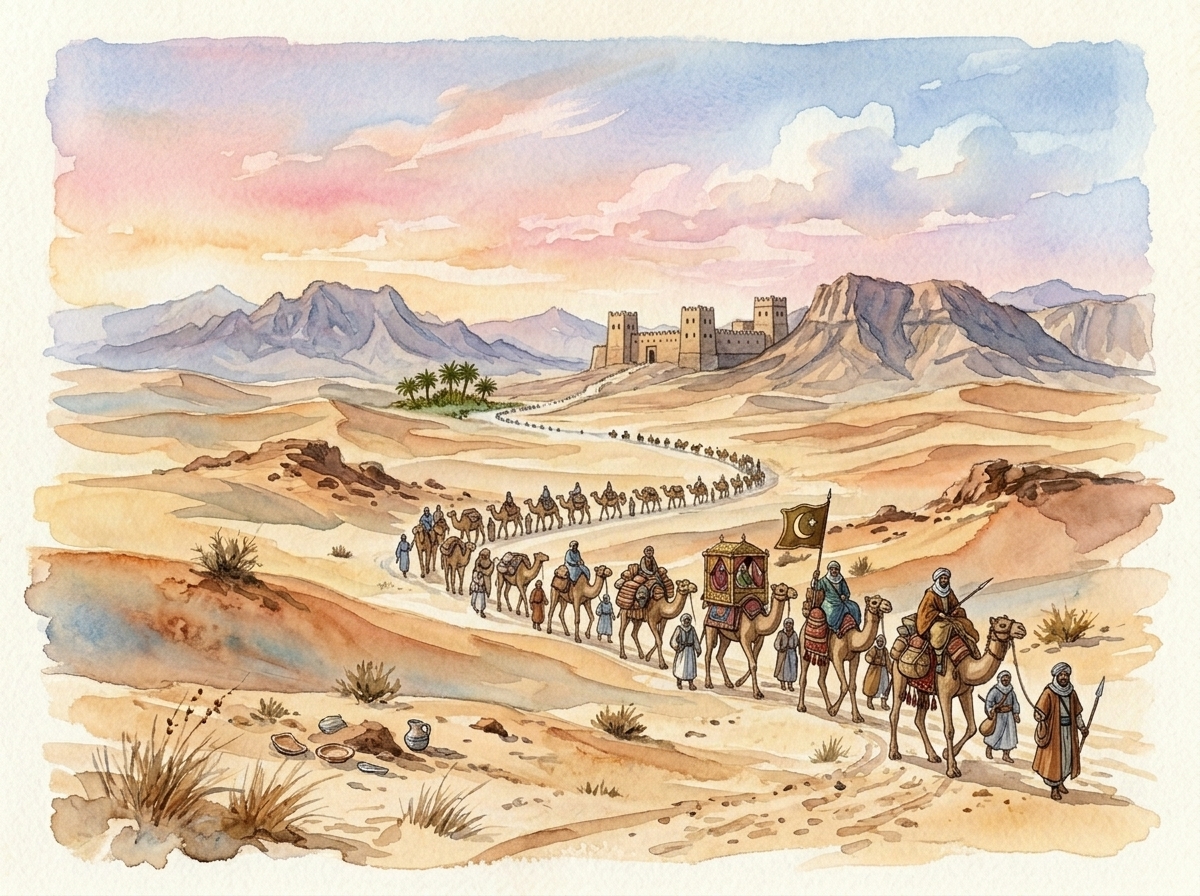
Situation Around the World before Birth of Rasūlullāh ﷺ he situation in Arabia and around the world was very desperate, and for more information in that regard, you could refer to an excellent book written by Sheikh Abul Hasan Nadawī called Mā Dhā Khasar Al-A’lam Bi-Inhitāt Al-Muslimīn? – What has the World Lost by the Downfall of the Muslims? And he has a whole chapter in his book talking about the situation in the world at the time of Rasūlullāh ﷺ. Over here we just have the situation in Arabia, but over there he talks about the situation in the Persian Empire, China, India, Roman Empire – all around the world. And it was in a very desperate state, it needed the light of Prophethood. It was not entirely evil; [some] people around the world still retained some good qualities, and Al-Būtī talks about some of the good qualities that the Non-Believers of the Arabs had in the time of Muhammad ﷺ, and he mentions a few examples like generosity and hospitality, fulfilling of a pledge, pride and denial of shame and injustice, firm will and determination, perseverance and deliberateness, a pure and simple life; so these are some aspects that were taken advantage of by Islām.
You see, the Sahābah, because they held these qualities, they were successful in spreading the Religion, their generosity and hospitality made them welcome in the nations they would go to, people around the world would welcome the Sahābah, they were not like a despised occupier; the Sahābah were welcomed in the lands they went to, the people saw them as a liberating army that would free them from slavery and the servitude that they were going through. This held true for example when it came to the people of Egypt and the people of Syria who were ruled by the Romans; they did not see the army that was coming in as displacing another occupying army; no, they saw them as people who were liberating them. And then there was something among the Sahābah; they did not care for power and authority. In many places they would go, they would train among the local people leadership and then they would hand it over to them. The Sahābah were out to call people to Islām, not to rip their resources like we had in the colonial era of Europe and the imperial powers of Europe; France, Britain, Italy, Holland. These European powers went all over the world taking advantage of the people and stripping them of their wealth; that was not the case with the armies of As-Sahābah. Their fulfilment of pledges, their firmness and determination; they were strong, you could count on them, they were powerful, when they gave a word, they would stick to it. So these were qualities that were very important for Da’wah, and that is why Allāh ﷻ chose that particular area to host the last Message. It was not a haphazard thing that Allāh ﷻ chose Makkah to be the birthplace of Rasūlullāh ﷺ; the people in that area at that time had qualities which made them the fittest to carry the Message, and they pledged their lives for it, and they gave their lives; they sacrifice everything for Islām.
Birth of Rasūlullāh ﷺ
Anyway, we talked last time about the story of the Elephant – Al-Fīl. Rasūlullāh ﷺ was born in ‘Aam Al-Fīl, he was born in the year in which
Allāh ﷻ destroyed the army of Abrahah. There are many stories mentioned referring to the birth of Rasūlullāh ﷺ, miracles that happened, and you could go into other books to study these stories. We are not going to go through them for the simple reason that I am trying to stick to a certain standard of narration, and these stories are usually weak. Rasūlullāh ﷺ, when his mother Āminah was pregnant, ‘Abdullāh, his father, was on a journey to Ash-Shām, but he ended up dying close to Madīnah and he was buried there, so he died before the birth of Muhammad ﷺ. Rasūlullāh ﷺ was born, and his mother saw a light that was coming out of her, and this light was reaching towards Ash-Shām, and that was interpreted as the light of the Message of Muhammad ﷺ reaching to the world. There are a few Ahādīth that we will state, but first of all, Allāh ﷻ says: Allāh is most knowing of where He places His Message.So Allāh ﷻ chose the best to be His Messenger – Muhammad ﷺ.
Rasūlullāh ﷺ – The Best of the Best:
Now, Imām Ahmad narrates a Hadīth that people were talking different things about Muhammad ﷺ, for example, they said that Muhammad was like a green tree growing in a desert. What they were trying to say was that Muhammad ﷺ was the only good person among his clan. So Ibn ‘Abbās says, “Certain things the people were saying reached the Messenger of Allāh, so he mounted the pulpit and asked, ‘Who am I?’ They replied and said, ‘You are the Messenger of Allāh.’ He replied, ‘I am Muhammad Bin ‘Abdillāh Bin ‘Abdul Muttalib.’” Meaning I am Muhammad, son of ‘Abdillāh, son of ‘Abdul Muttalib. [He continued], “Allāh devised the creation and made me part of His best creatures. He made them all into two groups, placing me in the better of them. He created the tribes, subdivided them into clans, and placed me in the best one. I am the best of you, both in clan and in spirit.” Rasūlullāh ﷺ was saying that I am not a good person among a group of evil people, he said [that] I am the best but I am also from among the best, so my clan and my tribe are the most noble. Rasūlullāh ﷺ also says, “Verily Allāh granted eminence to Kinānah from amongst the Al-An‘ām: 124
descendants of Ismā‘īl, and He granted eminence to the Quraish from among Kinānah, and He granted eminence to the Banī Hāshim among Quraish, and He granted me eminence from the tribe of Banū Hāshim.” So Rasūlullāh ﷺ was the greatest from among Banū Hāshim, and Banū Hāshim were the most noble among Quraish, and Quraish were the most noble among Kinānah, and Kinānah was the most noble of the descendants of Ismā‘īl.
Pure Ancestry of Rasūlullāh ﷺ
Now, Rasūlullāh ﷺ says in another Hadīth, “I was the product of true marriage (not fornication) from Ādam right on up to when my father and my mother had me. I was not at all tainted by the fornication of Jāhiliyyah.” In the time of Jāhiliyyah, because of the corruption and lewdness that occurs when people are far away from the true Message, their hearts become perverted, and a lot of immoral acts occur among the people. Rasūlullāh ﷺ is saying [that] even though part of my ancestry lived in those times, but I was a product of marriage all the way up to Ādam, so there is not any of my ancestors who had a relationship of Zinā', it is all through marriage all the way to Ādam, and that is something that Allāh has granted to Muhammad ﷺ, it was all through true marriage. I hope the meaning of this is clear that the lineage of Rasūlullāh ﷺ, from him all the way up to Ādam, was a product of marriage.
Names of Rasūlullāh ﷺ
The famous names of Muhammad ﷺ that we know are Muhammad and Ahmad, but he has some additional names, and we will talk about the meanings of these names.
Muhammad
The name that was given to him by his family was Muhammad ﷺ, and who was the one who named him Muhammad? Who was it? His grandfather; ‘Abdul Muttalib was the one who named him Muhammad ﷺ. Now, the name Muhammad means to be eternally praised, for he
obliges praise from people for his characteristics, his sayings, his actions, and he is the embodiment of praise and he is therefore Muhammad. So Muhammad means a person who draws praise. Muhammad ﷺ, as we mentioned earlier, is praised eternally. Allāh ﷻ has fulfilled the meaning of his name. There is no human being who ever lived in history who was praised like Muhammad; he is praised day and night.
Ahmad
The name Ahmad comes from the same root. You see, Muhammad and Ahmad come from the root Hamd, and what does Hamd mean? Praise.
When you say Alhamdulillāh, [it means] praise be to Allāh. So both the names Muhammad and Ahmad are derived from the same root. Muhammad means a person who draws praise, so he is praised, [and] Ahmad means that he praises Allāh. So Rasūlullāh ﷺ is the most among us in praising Allāh ﷻ. So there is no person that ever lived [or lives] who praises Allāh ﷻ like Muhammad ﷺ. So here you have two meanings; Muhammad means he is the most praised, Ahmad [means] he praises Allāh the most. These are the two famous names of Muhammad ﷺ.
Al-Hāshir
But he has also told us some of his other names, and these are from Ahādīth. One of his other names is Al-Hāshir. Al-Hāshir means ‘The gatherer to whom humanity will be resurrected in his wake’. The Prophet ﷺ is the first to be resurrected among the creation, then mankind will be resurrected following him. So the first person to be resurrected will be Muhammad and then people will come after that, so he is the first on the Day of Judgement.
for he is the last of the Prophets and Messengers and there shall be none succeeding him. So Muhammad ﷺ is the last, Al-Muqaffī is the last.
Al-Māhī – The eraser who erases and eradicates Kufr. There is no Prophet who will succeed in eliminating Kufr entirely except Muhammad ﷺ.
Now, that mission has not been fulfilled yet because his Ummah are still carrying on that mission, but the eventual victory of Islām, which will be the culmination of human history, will be a moment of time when the whole world will be Muslim, and that will be carried on by the Ummah of Muhammad ﷺ under the leadership of ‘Īsā – Jesus, may peace be upon him. So Muhammad ﷺ is the one who will be successful in eradicating [and] erasing Kufr from the face of the earth. So he is called Al-Māhī, he will erase and eradicate Kufr.
Nabïyyul Malhamah
One of his other names is Nabïyyul Malhamah – The Prophet of the Fierce Battle. Now, Malhamah is a fierce battle and it is also a series of battles. Rasūlullāh ﷺ was named the Prophet of Malhamah, the Prophet of Fierce Battles, [and] one can give different interpretations to that. One meaning is that his Ummah are the greatest in terms of Jihād – there is no Ummah that has fought Jihād like the Ummah of Muhammad ﷺ – that is one meaning. Another meaning that could be drawn from this name of Rasūlullāh ﷺ is that the future of humanity after Muhammad ﷺ will be that of very fierce battles, and we have seen examples of that in World War One and World War Two. History is divided into stages; we are now living in the stage of Muhammad ﷺ which extends until the Day of Judgment. So events that are happening now, even though they might not be done by Muslims, but we are still living in the era of Muhammad ﷺ, and everyone living on the face of the earth is part of the Ummah of Muhammad ﷺ in the sense that he is their Prophet. Now, whether they accept it or not is a different question, but they are part of his Ummah, and they will come on the Day of Judgement and will they be asked about who? They will not be asked about ‘Īsā, they will not be asked about Mūsā, they will be asked about Muhammad ﷺ – did you follow him or not?
Infancy of Rasūlullāh ﷺ
Umm Ayman Nurses Rasūlullāh ﷺ
Rasūlullāh ﷺ was nursed initially by his mother and Umm Ayman, whose name is Barakah, and Umm Ayman was an Abyssinian woman who lived in Makkah. She later on became Muslim, and Rasūlullāh ﷺ married her to his emancipated slave, Zayd Bin Hārithah. Zayd Bin Hārithah was a slave and Rasūlullāh ﷺ freed him and he married him to Umm Ayman. So she also nursed Rasūlullāh ﷺ.
Halīmah Fosters Muhammad
It was a tradition among the urban Arabs to send their children to grow up in the desert. They used to believe that the desert was more pure and had a cleaner environment and was healthier for them to grow in. They also believed that this would strengthen their character; because of the harshness, it would make them stronger people. So they would send their children out of the cities to live in the desert, and that happened with Rasūlullāh ﷺ, he was brought up in the land of Banū Sa’d. Halīmah Sa’diyah narrates to us this story, she says that she came with her friends to Makkah so that they could take with them children to nurse, and for them this was something that they were paid for. So you would have these Bedouin women come into Makkah and they would try to adopt or nurse some children. Halīmah Sa’diyah came into Makkah and she said that that particular year was a year of famine, so they were very poor. Now, she and her friends went around the houses of Makkah searching for children who needed to be nursed.
She said that Muhammad ﷺ was presented to each and every one of them and they all declined to accept him, they all refused to accept Muhammad ﷺ. Why? Because he was an orphan. And they were saying, “What good is an orphan? Who will pay us if his father is dead?” So they would not agree on a certain amount of money; what they would do is they would nurse the child and then they would be given some financial compensation as a gift. Since Muhammad ﷺ was an orphan, no one accepted him because he did not have a father to pay for him, and they said that his mother
would not really be able to pay us much, so they all declined to accept Muhammad ﷺ.
Halīmah says, “At the end of the day all of my friends were going back to their camps with children except myself, I found no one to take with me. So at night I told my husband, ‘I am going to go next day in the morning and accept that child called Muhammad since we have no one else, I am not going to go back home empty-handed.’” She said, “My husband agreed. So I went next day in the morning and I went to Muhammad’s mother, Āminah Bint Wahb, and I said that I accept to take your child.”
Blessings of Muhammad ﷺ Become Apparent
Halīmah says, “The night before, we could not get any sleep, because our camel was not providing any milk, and because of the famine and the hunger I was not able to provide my own child with milk, so he would cry throughout the night and keep us awake.” That was their situation; very poor. Halīmah says, “As soon as I picked up Muhammad ﷺ and took him back to my camp, my breast immediately welcomed him and provided him with all the milk that he needed until he was satisfied, and the milk was enough for my son, and that was the first night that we were able to get a full night of sleep, because my son was not able to sleep for quite a few nights.” So immediately the Barakah of Muhammad ﷺ was apparent. She said, “And then my husband went out to milk the camel and it was providing so much milk that my husband came back and said, ‘O Halīmah, you have brought us a blessed soul.’” There is something going on; all of these blessings are showering us since you brought this young child in our house. So now they were still camping in Makkah, and they were ready now to go back to the desert. Halīmah says, “When we were coming to Makkah, I was riding a donkey that was so old and weak it was slowing down the whole group and it was annoying everyone else.” She said that this donkey was old and weak. You know, sometimes you would have a donkey which rather than going straight it would go sideways – very tired and disoriented! She said, “When we were going back, my donkey was the fastest among the group. My friends were asking me, ‘Is this the same animal you brought
with you when we came to Makkah?’” She said, “Yes.” They said, “By Allāh, something is going on.”
Now they went back to their land. Halīmah said, “Me and my husband would send out our goats to graze; they would come back full and we would milk them whenever we wanted, while everyone else in our tribe, their animals would be hungry without any milk.” Now, people were starting to complain to the shepherds telling them, “Why do you not go and graze the animals in the same place where Halīmah is grazing hers?” She said, “So they would take their animals after us following us to the same place, yet ours would come back full and theirs would come back empty.” And she said, “The child was growing up and we were seeing the blessings of Allāh on all of us because of him.” There is a statement here where she says, “And God went on blessing us this way and we recognised it. Then he reached two years of age; he was already growing up a very fine boy, not like the other children. I swear that by the age of two, he was a sturdy boy. So we took him to his mother.”
Time for Muhammad’s Return to his Mother Āminah When he was two years old, now it was time for them to return the child – that was it. And Subhān'Allāh, it seems that the Arabs of Makkah learned that the city is not a very healthy environment, especially with Makkah, because it received a lot of visitors from all over Arabia; you know, they could bring with them different diseases and germs into town. But the desert is very pure; the desert is hot and dry, and that makes it an unsuitable environment for the growth of bacteria, and it would be a very healthy place to be. So now at the age of two it was time for them to return Muhammad to his mother. They went to Makkah, they told Āminah, “We want to keep Muhammad with us.” You know, it is not good for him to be in Makkah and it might be dangerous; they were bringing up all of these excuses, they wanted to keep Muhammad ﷺ, they loved him so much, they knew that he was blessed. They wanted to keep him and they kept on trying and trying and trying until Āminah agreed. Subhān'Allāh, that was the
blessing of Allāh following Muhammad ﷺ. She eventually agreed, so they took him back with them.
One day Muhammad ﷺ was playing with his foster-brother, so his foster- brother came in rushing and said, “My brother from Quraish!” They asked, “What happened to him?” He said, “Two men dressed in white came down and knocked him to the ground and then they opened up his chest15.” So Halīmah said, “Me and his father went rushing, and we came to see Muhammad ﷺ, his colour was pale, and we asked him what happened, he said, ‘Two men came and they opened my chest and they took out something from it.’” Halīmah, she loved Muhammad ﷺ so much and she did not want anything to harm him, plus she did not want anything bad to happen to him when he was with her. So she rushed back to Makkah and went to Āminah and said, “Here is Muhammad, you can now have him. We have fulfilled our responsibility.” Āminah said, “How come you are bringing him back when you were so interested in keeping him?” They said nothing. She insisted, she said, “Tell me what happened. You were so insistent on keeping him and now you want to bring him back? What happened?”
Halīmah said, “She kept on questioning us until we eventually told her.” Āminah responded and said, “Are you afraid for him that Satan might hurt him? By Allāh, that will not happen. When I was pregnant with him, it was the lightest pregnancy, and when I delivered him, his birth was unlike any other child, and when he came out, I have seen light that was reaching to Ash-Shām. So the protection of Allāh is with him, and I am sure that he will have a great future.” So now Muhammad ﷺ was back with his mother [Āminah].
Āminah and ‘Abdul Muttalib Pass Away
His mother passed away when he was at the age of six, so now he lost his father and mother. He was adopted by his grandfather ‘Abdul Muttalib who raised him up, and ‘Abdul Muttalib passed away when Muhammad ﷺ was at the age of eight. And Muhammad ﷺ was then taken care of by his uncle
Abū Tālib, who protected him and helped him and supported him for the next 40 years in the life of Muhammad ﷺ.
This is the early years of Muhammad ﷺ. We will talk about a few important events here and there that happened before Prophethood; we are not going to spend much time on the pre-Prophethood era, but we will talk about the important events that happened.
Events Pre-Prophethood
Rasūlullāh ﷺ’s Prevention from Attending Parties Rasūlullāh ﷺ was protected by Allāhl he would not commit sins which were usual and normal amongst his people, Allāh ﷻ was keeping him away from these sins. Rasūlullāh ﷺ narrates an example of this, he says, “I was a shepherd, and one day I told my friend who was also a shepherd with me, ‘Tonight I want to go into Makkah to attend the parties that my peers attend.’” Rasūlullāh ﷺ was a young man at the time and all of his friends would attend parties except he, he was the only one who would not join them in these parties, so Rasūlullāh ﷺ said, “One day, I wanted to go and see what they were doing, so I told my friend to take care of my flock until I come back; he agreed. I went into Makkah and I arrived at the place where they were having this party. As soon as I was hearing the music, Allāh struck my ears so I fell down asleep. By the time I woke up, the party was over.” He said, “The next day, I decided to attend another party. I went into Makkah [with] the same arrangement with my friend, and as soon as I reached the place and I was hearing the music, Allāh ﷻ struck my ears again and I fell down asleep. And I woke up after the party was over and I realised that this is a sign to me from Allāh; Allāh ﷻ is giving me a sign.” Rasūlullāh ﷺ’s Natural Dislike towards Idol-Worshipping We have another example that was mentioned by Zayd Ibn Hārithah. Zayd Ibn Hārithah, who was a servant of Rasūlullāh ﷺ, narrates and says, “There were brass idols called Isāf and Nā'ilah which the Polytheists would touch as they performed Tawāf. The Messenger of Allāh said, ‘Do not touch
it.’” So you had Isāf and Nā'ilah, and the people of Quraish, when they would make Hajj or ‘Umrah, they would touch these two idols, it was part of their worship. Rasūlullāh ﷺ told Zayd, “Do not touch them.” Now, how did Rasūlullāh ﷺ know that he was not supposed to touch the idols? It was Hidāyah coming from Allāh ﷻ. [Zayd continues], “So as we went round again, I told myself that I would touch it to see what would happen. When I did so, the Messenger of Allāh asked me, ‘Were you not forbidden to do that?’” Zayd then stated, “The Messenger of Allāh never saluted an idol right up to when Allāh the Almighty honoured him and He gave him the Revelation.” Rasūlullāh ﷺ never made Sujūd to an idol, never touched the idols in the sense of worship, and Rasūlullāh ﷺ had a natural dislike towards idol-worshipping, and he even applied those rules on his family; Rasūlullāh ﷺ told Zayd Ibn Hārithah, who was his servant, ‘Do not be involved in touching these idols.’ And that is why ‘Alï Ibn Abī Tālib never worshipped an idol; why? Because he was raised up in the house of who? In the house of Rasūlullāh ﷺ. When Abū Tālib was poor, Rasūlullāh ﷺ offered to take care of his son ‘Alï Ibn Abī Tālib, so ‘Alï Ibn Abī Tālib was raised up by Rasūlullāh ﷺ, and ‘Alï Ibn Abī Tālib therefore never made Sujūd to an idol, he never worshipped idols because he was brought up in the house of the Messenger of Allāh ﷻ.
Allāh ﷻ was guiding him towards some of the ‘Ibādāt that no one else knew about. Among the people of Quraish, during Hajj, they would be the only people not to participate in ‘Arafah. So you have different rituals of Hajj; you have Tawāf around Al-Ka’bah, you have Sā‘ī between As-Safā Wal-Marwā, you have standing in ‘Arafah, you have camping in Minā. The people of Quraish would participate in all of these rituals with the exception of ‘Arafah. Why? Because ‘Arafah is considered out of Al-Haram, ‘Arafah is outside the boundaries of the sacred place – Al-Haram. So all of the Arabs would go to ‘Arafah in Hajj with the exception of the people of Quraish, they would say, “We are the dwellers of Al-Haram; how can we go outside of Al-Haram?” That was their logic; if we are part of Al-Haram, if we are the people of Makkah, how can we get out of the boundaries of Makkah? So they would stop at the borders with ‘Arafah. Al-Mut‘am Bin Jubair [once]
lost his camel and he went to look for it and he ended up searching for his camel in ‘Arafah. To his amazement, who does he find there? Muhammad ﷺ. Al-Mut‘am said, “Is he not from among the people of Quraish? What is he doing in ‘Arafah?” But Allāh ﷻ was guiding Muhammad ﷺ by Fitrah to go to ‘Arafah during the time of Hajj.
Shepherding – Rasūlullāh ﷺ’s First Profession The first profession for Rasūlullāh ﷺ was shepherding; that is the first thing he did. And in Bukhārī, Rasūlullāh ﷺ says, “Allāh has not sent a Prophet who was not a shepherd.” His Companions then asked, “And you?” He said, “Yes, I used to herd sheep with compensation from the people of Makkah.” Every Prophet has been a shepherd. It is striking that Allāh ﷻ has trained all of his Anbiyā' by going through this line of work; being a shepherd.